
World Briefing 2026-10-08: Hormuz Attacks Keep Brent Near $100
Attacks in the Strait of Hormuz kept Brent near $100 as China reopened after its holiday. Transpacific box rates stay high and the won closed near 1,339.
Contents
- Key takeaways
- Hormuz attacks and crude near $100
- China reopens, container rates stay high
- US–China tariff lists are public; the cut is not in force
- The won at about 1,339 per dollar
- What this means on the desk
- FAQ
- What happened in oil and Hormuz on 7 October?
- Are the US–China tariff cuts in force?
- Where did the won close?
Key takeaways
- On 7 October Brent held around $100 a barrel and WTI in the high $80s to around $90, while at least nine attacks had been logged in the Strait of Hormuz so far in October.
- With China’s National Day holiday over, congestion is building again at Shanghai and Ningbo, and Far East–US spot rates remain 344% (West Coast) and 335% (East Coast) above 28 February.
- Washington and Beijing published $30 billion tariff-cut lists with no start date, and the won closed at 1,339.10 per dollar.
More barrels are moving through the strait, but the attacks on ships have not stopped. Brent held around $100 a barrel, and with China’s National Day holiday over, congestion is building again at Shanghai and Ningbo. Washington and Beijing have published tariff-cut lists with no start date, and the won firmed to about 1,339 per dollar.
Hormuz attacks and crude near $100
Oil traded in two directions on 7 October: more barrels were moving through the strait, and attacks on ships had not stopped. Brent held around $100 a barrel and West Texas Intermediate in the high $80s to around $90. One market tally put Brent at $100.95 and WTI at $88.94 as of 21:25 UTC on 7 October, about 40% above a pre-crisis Brent baseline near $72 in February. The Brent–WTI spread was $12.01.
UK Maritime Trade Operations has logged at least nine attacks in the waterway so far this month, already half the combined Hormuz and Persian Gulf count for all of September. Flows are recovering. At an industry forum, West Asian oil movements were put at about 80% of pre-conflict levels, and roughly 12 million barrels a day were said to have left the strait over the prior seven to ten days. The International Energy Agency is preparing to discuss an emergency release of up to 100 million barrels from diesel and crude stocks.
Sources: CNBC-TV18, 7 Oct 2026, Strait of Hormuz Report, Bloomberg, 6 Oct 2026
China reopens, container rates stay high
China’s National Day holiday ran from 1 to 7 October. Factories and inland transport restart on the 8th, and 8–16 October is the stretch most likely to stay congested. An Asia-Pacific freight report said Shanghai remains severely congested into mid-to-late October, with berth waits beyond five days. On-time performance was put at 21% in Shanghai and 34.6% in Ningbo.
Far East–US spot rates are still 344% higher to the West Coast and 335% higher to the East Coast than on 28 February, before the Hormuz crisis. The latest weekly moves were small: up 1.4% to the West Coast and 0.7% to the East Coast. A three-month view points to $6,000–7,000 per FEU on the East Coast and $4,500–5,500 on the West Coast — a correction, not a collapse. On 1 October the world container index stood at $4,434 per FEU, and Shanghai–Rotterdam at $3,399. Asia–Europe has been easing since July.
Sources: PortCalls Asia, World Ports Organization / Xeneta, Datawrapper freight chart
US–China tariff lists are public; the cut is not in force
Washington and Beijing have published lists covering $30 billion of imports each, to be brought back toward most-favored-nation rates. China’s list has 1,619 lines, including US cotton and other farm goods. The US list has 77 consumer items. China’s commerce ministry said about 90% of the covered lines would take the MFN rate, but both sides still need domestic legal steps, and they intend to move together. No start date or line-by-line cut has been published. A logistics market note put the truce extension through 10 January 2027 and described the $30 billion framework as still under discussion. A deferral of US port-call fees on China-linked ships has not been confirmed in an official notice.
Sources: ITNK, PortCalls Asia, World Ports Organization / Freightos
The won at about 1,339 per dollar
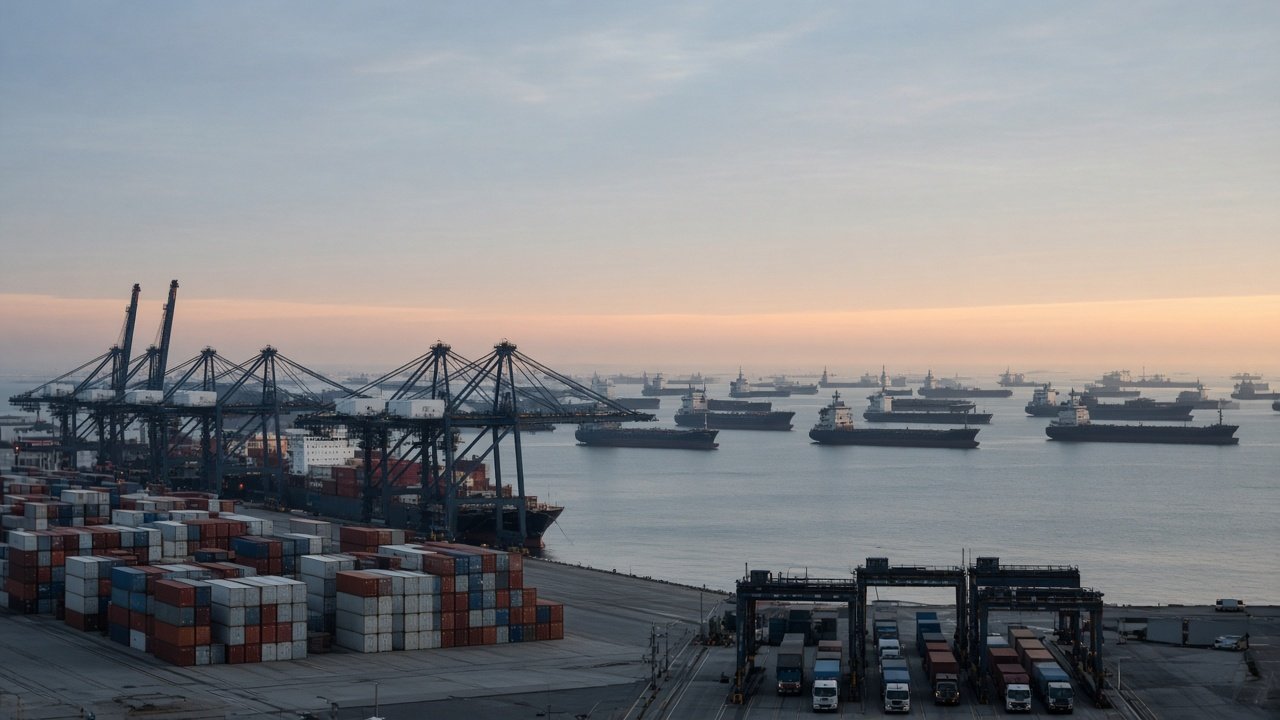
The Seoul market closed on 7 October at 1,339.10 won per dollar, 210.3 won or 13.6% below the 30 June close of 1,549.4. The end-September rate of 1,352.8 marked the largest quarter-end drop since the fourth quarter of 1998. The third-quarter average was 1,418.6, 5.5% below the second quarter, so an export dollar converted at the quarterly average yielded about 83 won less. A cross rate derived from the European Central Bank reference was 1,338.69 on 7 October.
Sources: Chosun Biz, 8 Oct 2026, FX Tribune
What this means on the desk
For the day before, see the 7 October world briefing; for choosing a container mode, see FCL vs LCL; and for matching lines against tariff lists, see the HS code guide.
Freight: US-bound spot rates are near a peak; Asia–Europe is softer. After the holiday, recheck cutoffs, rollovers and empty-box availability, and do not treat a quoted rate as fixed through mid-October. Bunker fuel is still well above late-February levels. Split emergency bunker and war-risk surcharges out of the invoice and note their expiry.
FX: A stronger won reduces won proceeds on dollar sales. The gap between the third-quarter average near 1,419 and the spot rate near 1,339 belongs in hedge limits and forward balances. Do not convert non-dollar contracts into won without a fresh cross rate.
Customs: The tariff lists are public, not in force. Match HS codes, but do not write an MFN reversion into a booking until the notices land. The same applies to any port-fee deferral. On payment, a fresh oil spike is a reason to check letter-of-credit headroom and whether war risk is actually covered.
FAQ
What happened in oil and Hormuz on 7 October?
Brent held around $100 and WTI in the high $80s to about $90. UKMTO logged at least nine attacks this month, while West Asian oil flows recovered to about 80% of pre-conflict levels.
Are the US–China tariff cuts in force?
No. Both sides published lists covering $30 billion of imports each, but domestic legal steps are still needed and no start date or line-by-line cut has been published.
Where did the won close?
At 1,339.10 per dollar on 7 October, 13.6% below the 30 June close of 1,549.4.
Related posts
World Briefing 2026-10-10: Hormuz Tensions Keep Brent Near $104 and Freight Costs High
A strike on an LPG carrier in Hormuz kept Brent near $104 on 9 October. China's fuel-export restart and a WTO trade forecast raised to 3.9% now shape costs.
World Briefing 2026-10-09: Pacific freight peaks as the US-China truce holds
Pacific box rates slipped off a yearly high after Golden Week but stay elevated. A US-China truce, crude near $104, and Europe’s CBAM probe hit costs together.
World Briefing 2026-10-07: Hormuz Flows Recover, Tankers Don't
Brent settled at $100.58 as Gulf crude flows recovered but tankers stayed scarce. Dry-bulk freight eased and the dollar softened after weak US jobs data.
Brent Jumps 4% on US Carrier Reports: Trade Cost Impact
Brent rose 4.37% on 1 Oct after reports of a US carrier heading to the Middle East, then eased to ~$100. Freight, BAF and FX checks.
Collaboration & consulting: [email protected]
More in Markets & Economy: Global Sales & Market Research