
Money in Korea: Cards, Cash Exchange and T-money
How foreign cards, cash exchange, Global ATMs and T-money transit cards work for visitors to Korea, plus the fee traps to avoid on your first day.
Contents
- Key takeaways
- Paying by card
- Getting cash: exchange offices, banks and ATMs
- T-money and other transit cards
- A simple plan for your first day
- Common mistakes
- FAQ
- Do I need cash in Korea?
- Where is the best place to exchange money in Korea?
- How much does a T-money card cost?
- Can I use a foreign credit card everywhere in Korea?
- Sources
Most shops, restaurants and hotels in Korea accept foreign credit and debit cards, so you can pay for much of your trip by card. You still want a small amount of Korean won in cash for some market stalls and small eateries, and for topping up a T-money transit card.
Key takeaways
- Visa and Mastercard work almost everywhere; other networks are less reliable, so bring a backup card.
- Exchange only a little at the airport and always choose to be charged in Korean won, not your home currency.
- A T-money card costs a few thousand won, works on subways, buses and many taxis, and is topped up with cash.
Paying by card
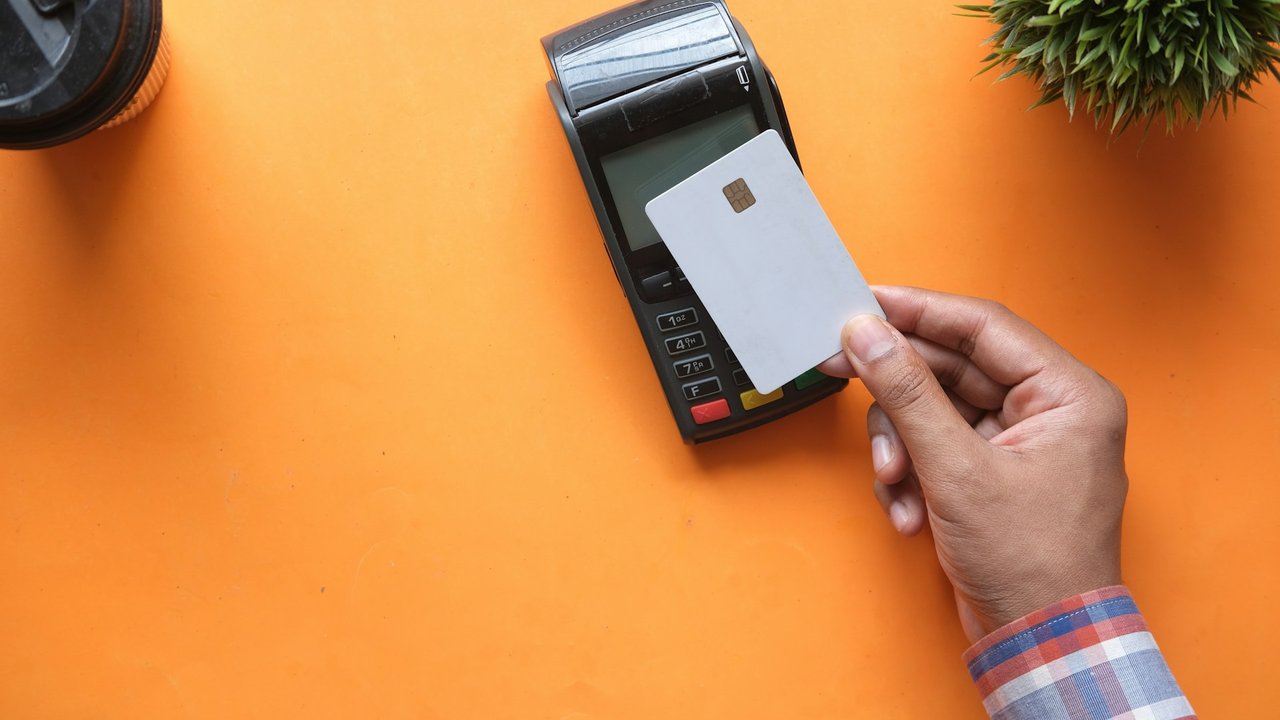
Visa and Mastercard are accepted at hotels, department stores, convenience stores, chain cafes and most restaurants. Contactless payment is common in big cities. UnionPay works in many places, while American Express, JCB and Discover are accepted less consistently.
Some places are still cash-first:
- Stalls in traditional markets
- Very small family-run eateries
- Street food vendors
Carry at least two cards from different banks, ideally on different networks, in case one is declined or blocked.
Pay in won, not your home currency. Card terminals and ATMs sometimes offer to charge you in your own currency. This is called dynamic currency conversion, and the exchange rate it uses usually includes an extra markup. Choose KRW every time.
Getting cash: exchange offices, banks and ATMs
Exchange offices. Licensed money changers operate at the airports and in busy tourist districts. Airport rates are often less favorable than downtown, so a sensible plan is to change just enough at the airport for your first day: a transit card top-up, a meal and a taxi if needed.
Banks. Banks exchange foreign currency at their branches, typically on weekdays during office hours of roughly 09:00 to 16:00. Bring your passport.
ATMs. Not every ATM accepts foreign cards. Look for machines marked “Global ATM” or showing the logo of your card network. You can usually find them at:
- Major bank branches
- Airports and large train stations
- Some convenience stores and subway stations
The ATM operator may charge a fee, and your own bank may add another one. Withdrawal limits also vary by machine and card. Check your bank’s foreign fees before you travel.
Worked example (illustrative fees). You withdraw 100,000 KRW from a Global ATM.
- Suppose the ATM operator charges 3,600 KRW and your home bank charges a 2% foreign fee on the total.
- Amount debited in won: 100,000 + 3,600 = 103,600 KRW
- Home bank fee: 103,600 × 0.02 = 2,072 KRW equivalent
- Total cost: about 105,672 KRW worth of your home currency for 100,000 KRW in cash, or roughly 5.7% in fees
Taking out larger amounts less often keeps fixed ATM fees down. Selecting home-currency conversion on the screen would add another markup on top.
T-money and other transit cards
T-money is the most widely used rechargeable transit card in Korea. One card works on:
- Subways and city buses in Seoul and most other big cities
- Many taxis
- Purchases at many convenience stores
You can buy it at convenience stores and at subway station machines or information centers. The card itself costs a few thousand won, and the price depends on the design. The purchase price is not refunded, but any unused balance can usually be refunded, minus a small handling fee, at participating stores.
How to use it:
- Top up with cash at subway station machines or at convenience store counters.
- Tap in and tap out on buses as well as on the subway. Tapping out is how the system applies transfer discounts.
- Transfer within the time limit. In the Seoul area, transfers are usually allowed within about 30 minutes of leaving one vehicle, with a longer window late at night, and only a limited number of transfers per journey count.
Seoul also offers the Climate Card, an unlimited-ride pass, for people staying longer. Its prices, coverage and short-term options are set by city policy and may change, so check the official Seoul or T-money pages before you buy one.
A simple plan for your first day
- Exchange a small amount at the airport, or withdraw from a Global ATM.
- Buy a T-money card and load around 20,000–30,000 KRW, which covers several days of subway rides for most visitors.
- Pay for meals and shopping with your card, choosing KRW every time.
- Keep some cash in small notes for markets and street food.
- Tell your bank your travel dates so its fraud checks do not block your card.
If you have not planned your airport transfer yet, see Incheon Airport to Seoul: AREX, bus or taxi. For entry rules before you fly, read K-ETA and Korea entry requirements.
Common mistakes
- Exchanging a large amount at the airport at a weaker rate.
- Choosing to be charged in your home currency at an ATM or card terminal.
- Assuming every ATM accepts foreign cards.
- Forgetting to tap out on buses, which can cost you the transfer discount.
FAQ
Do I need cash in Korea?
A little. Cards cover most spending, but some market stalls and small eateries prefer cash, and T-money is usually topped up with cash. Many visitors carry the equivalent of a day or two of small expenses.
Where is the best place to exchange money in Korea?
Licensed exchange offices in tourist districts and bank branches usually offer better rates than airport counters. Change only what you need for the first day at the airport, then compare rates in town.
How much does a T-money card cost?
The card itself costs a few thousand won, depending on the design, and that price is not refundable. You then load money onto it separately.
Can I use a foreign credit card everywhere in Korea?
Almost everywhere in cities, especially with Visa or Mastercard. Exceptions are some markets, street stalls and very small shops, so keep a backup card and some won with you.
Sources
- Korea Tourism Organization, Korean currency and exchange information: https://english1.visitkorea.or.kr/enu/TRV/TV_ENG_1_3.jsp
- Korea Tourism Organization, VISITKOREA official English website: https://english.visitkorea.or.kr/
- T-money, official English website: https://eng.tmoney.co.kr/
- Bank of Korea, official English website: https://www.bok.or.kr/eng/main/main.do
Last checked: 2026-10-10
Related posts
K-ETA and Korea Entry Requirements (2026 Guide)
Do you need a K-ETA for Korea in 2026? How the temporary exemption works, what the free e-Arrival Card is, and how to avoid fake agency sites.

Incheon Airport to Seoul: AREX, Bus or Taxi
AREX Express, All-Stop train, airport bus or taxi from Incheon Airport to Seoul: approximate times, fares and which one fits your hotel and arrival time.

Korea’s DMZ: The Dividing Line Explained
What the Korean Demilitarized Zone (DMZ) is, why it exists, and how the North–South dividing line shapes history visitors should understand.

Korean War and North Korea: Context for Visitors
The Korean War’s legacy and North Korea’s rise explained for travelers and market visitors who need clear historical context without the jargon.
Collaboration & consulting: [email protected]
More in Korea Guide: Export to Korea: Market Guide